German Sentence Structure Made Easy 🇩🇪 | Learn German in Pune
- Get link
- X
- Other Apps
German Sentence Structure Made Easy 🇩🇪 | Learn German in Pune

.jpeg)
For example:
👉 Ich wohne in Berlin. – I live in Berlin.
👉 Heute lerne ich Deutsch. – Today I learn German.
Notice that the sentence can begin with a different element, but the conjugated verb remains in Position 2. This is one of the most important foundations for beginners learning German A1.
A basic German sentence often follows:
Subject + Verb + Object
👉 Ich lerne Deutsch.
For questions, the structure changes. Yes/No questions generally begin with the verb:
👉 Lernst du Deutsch? – Do you learn German?
W-questions follow:
Question Word + Verb + Subject
👉 Wo wohnst du? – Where do you live?
German Can Be Surprisingly Creative
One thing many beginners notice about German is its ability to combine words.
Sometimes, two familiar ideas come together and create a word with a meaning that feels completely unexpected when you first see it.
For a learner, these words can actually be useful.
Why?
Because instead of remembering an abstract vocabulary item, you have a story behind the word.
Here are seven examples that can make your German vocabulary practice a little more interesting.
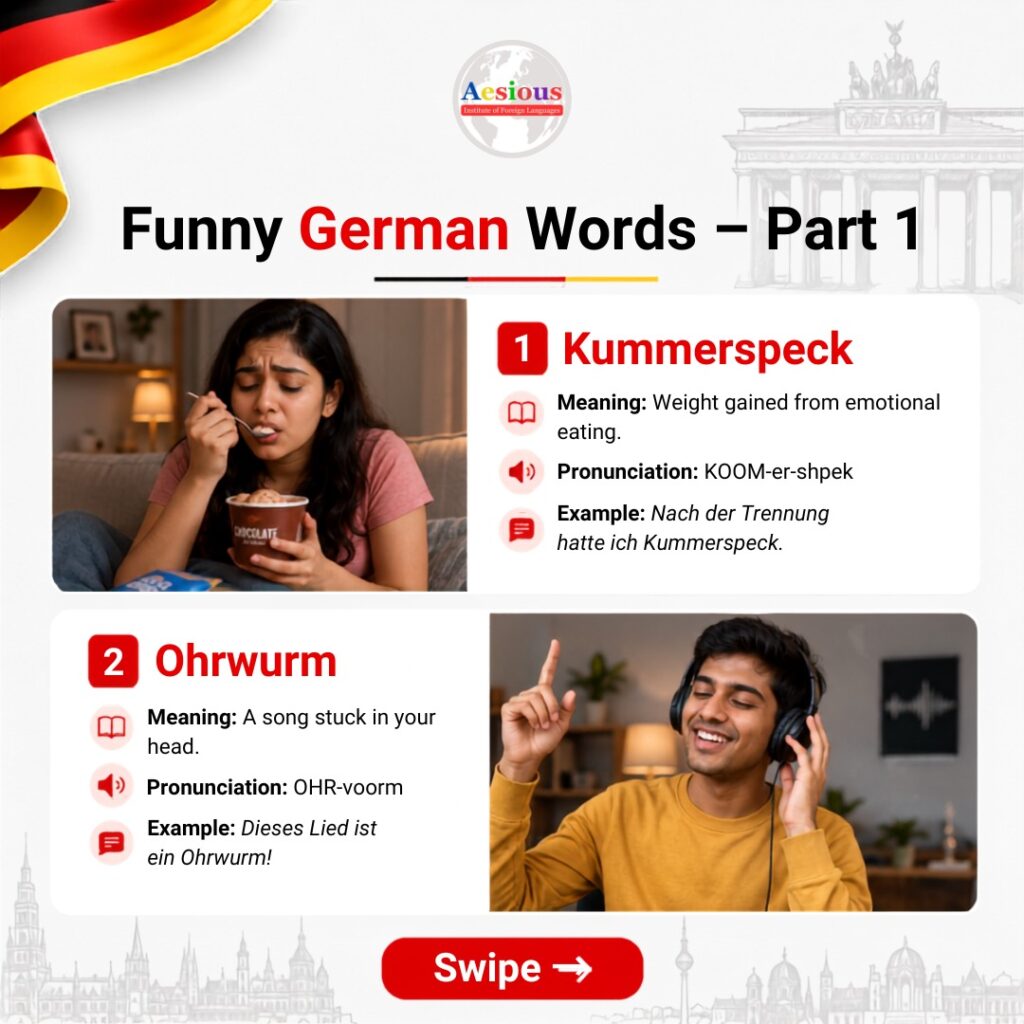
1. Kummerspeck: When Your Emotions Affect Your Eating
Imagine having a difficult week.
You are stressed, your favourite series is on, and suddenly you find yourself reaching for snacks again and again.
German has a wonderfully memorable expression for the extra weight associated with emotional eating: Kummerspeck.
The word is built around the ideas of emotional distress and “bacon.”
You probably will not forget it once you understand the idea behind it.
Try remembering it like this:
Kummer = emotional distress
Speck = bacon/fat
The combination gives you a memorable way to connect the word with its meaning.
This is a good example of why understanding how German words are formed can help vocabulary stay in your memory.
2. Ohrwurm: That Song You Cannot Stop Thinking About
You listen to a catchy song in the morning.
By afternoon, you are working, studying, or travelling, but the same tune is still playing inside your head.
You have probably experienced this many times.
German calls this an Ohrwurm.
The word is literally connected with the idea of something being in your ear, which makes the expression surprisingly easy to remember once you know it.
For German learners, this is a perfect everyday vocabulary word because music, conversations and social media constantly give us opportunities to experience it.
Next time a song refuses to leave your head, you will know what German speakers call that experience.
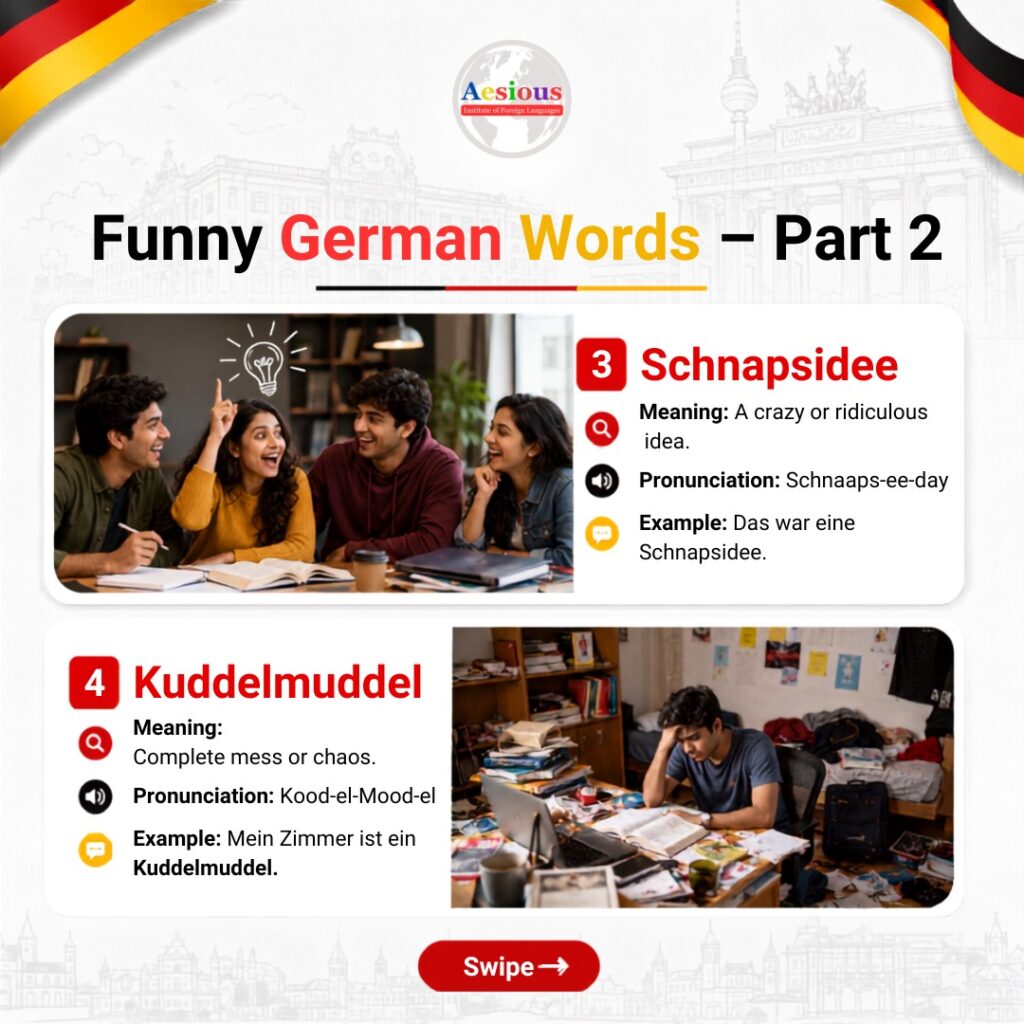
3. Schnapsidee: When a Brilliant Idea Suddenly Becomes a Terrible One
Have you ever had a late-night idea that sounded absolutely brilliant?
Then you thought about it the next morning and wondered why you ever considered it?
That is the kind of situation where the German word Schnapsidee can be useful.
It is used for a foolish, crazy, or unrealistic idea.
The interesting thing about this word is its humorous feeling. It is not simply describing an idea as “bad.” It gives the impression that the idea was so questionable that it might have been created under the influence of alcohol.
📍 Looking for German language classes in Pune, Aundh, Wakad, Viman Nagar or Hinjewadi? Build your German foundation with structured lessons and speaking practice.
Start simple. Speak confidently. 🇩🇪
#GermanLanguageClassesPune #GermanClassesPune #GermanGrammar #LearnGerman #GermanA1 #GermanLanguageCourse #GermanSpeakingClasses #SpokenGerman #GermanInstitutePune #GermanClassesAundh #GermanClassesWakad #GermanClassesVimanNagar #GermanClassesHinjewadi #Aesious
- Get link
- X
- Other Apps


